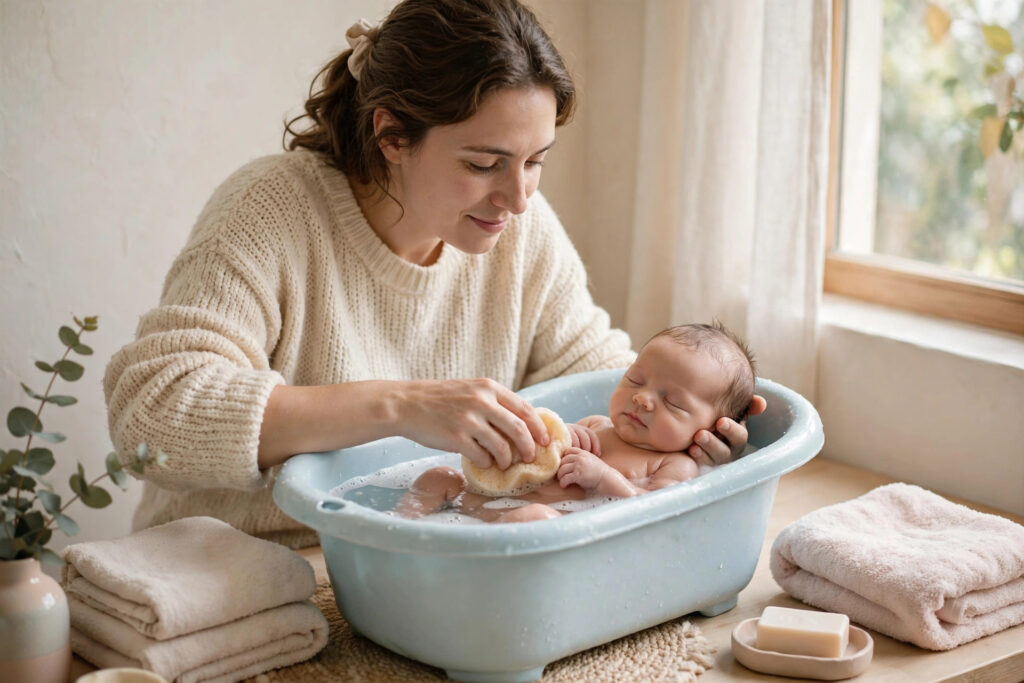
Learning how to bathe a newborn is simpler than most first-time parents expect. Start with sponge baths two to three times a week until the umbilical cord stump falls off and heals — usually within the first two weeks. After that, short tub baths in warm water (around 98–100°F / 37–38°C) are all your baby needs.
Why Newborn Baths Are Different
Newborns don’t need daily baths. In fact, bathing too often dries out their delicate skin. Two to three baths per week is plenty for the first few months, according to pediatricians at Reliant Medical Group.
For the first week or two, stick to sponge baths. The umbilical cord stump needs to stay dry so it can fall off naturally and the navel can heal. Once it’s gone and the area looks healed, you’re clear for tub baths. The same goes for a circumcision site if that applies.
On non-bath days, a warm washcloth on the face, neck folds, hands, and diaper area keeps your baby fresh. That’s genuinely enough.
Gather Your Supplies First
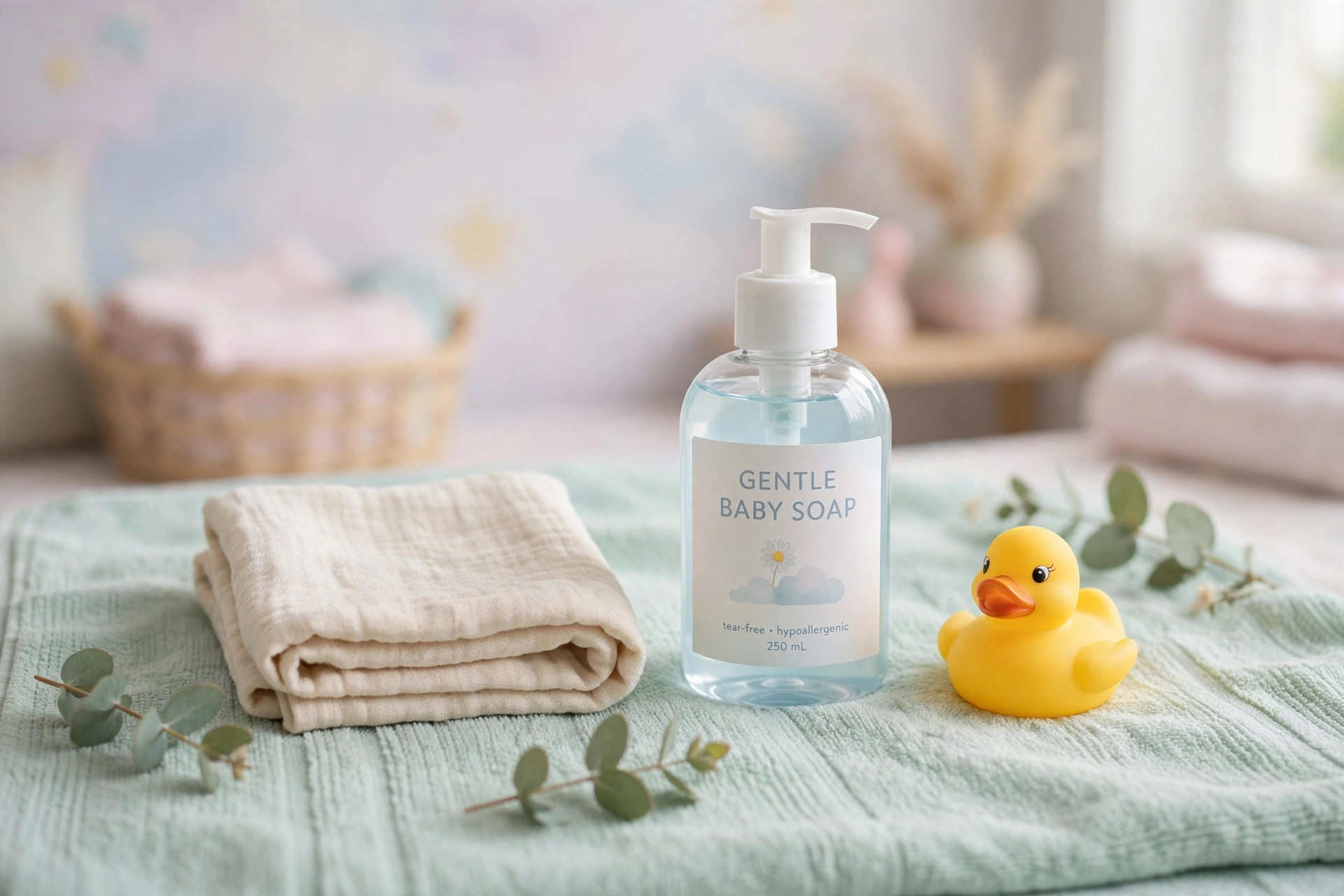
This is the part nervous parents forget: once your hands are on a wet, slippery newborn, you cannot walk away to grab something. Get everything within arm’s reach before the bath starts.
- A baby bathtub, clean sink, or large basin
- A soft washcloth (plus a spare)
- Mild, fragrance-free baby wash or cleanser
- Baby shampoo (one gentle formula covers both hair and body)
- Two hooded towels — one for wrapping, one in case
- A clean diaper and fresh clothes
- Cotton balls for eyes and ears
- A small cup for rinsing
- Baby lotion or cream if your pediatrician recommends it
Skip powders and oils for newborns. They’re not necessary, according to Pediatrics East, and powder can irritate tiny lungs if it gets airborne.
Getting the Water and Room Right
Babies chill fast and overheat fast, so the setup matters more than most parents realize. Warm up the room first — a bathroom heated by a hot shower running for a few minutes works well, because newborns lose body heat quickly in cold air, according to AboutKidsHealth.
Fill the tub or basin with about two inches of warm water — enough to cover your baby’s lower body, with most of the face and chest well above the surface, per Reliant Medical Group’s guidance. The water should feel warm on the inside of your wrist or elbow, never hot.
If you like numbers: aim for 97–100°F (36–37.8°C). A bath thermometer works, but your elbow is just as reliable. Turn off the tap before putting your baby in, and fill cold water first if you’re drawing from the tap. Healthline’s newborn bathing guide also recommends setting your home water heater no higher than 120°F (48.8°C) to prevent scalding.
The Sponge Bath, Step by Step
Do this on a changing table or counter with a padded towel underneath. Keep your baby loosely wrapped in a dry towel, exposing only the part you’re washing.
- Start with the face. Use a soft washcloth dampened with plain warm water — no soap. Wipe each eye from the inner corner outward with a fresh, damp cotton ball. Then wipe around the nose, mouth, and ears.
- Wash the head. Wet a corner of the cloth, add a drop of baby shampoo if you like, and gently wash the scalp. Rinse well with a clean damp cloth and pat dry. Shampoo once or twice a week at most, according to AboutKidsHealth — daily washing strips the scalp.
- Work head to toe. Uncover one section at a time. Wash the neck folds, armpits, hands, and feet with a mild cleanser. Rinse so no soap residue stays on the skin.
- Do the diaper area last. Wipe front to back for girls; clean under the scrotum for boys. This ordering keeps the bath water and cloth clean through the earlier steps.
- Pat dry. Never rub newborn skin. Pay special attention to the creases under the chin, behind the ears, and in the armpits — moisture trapped there causes rashes.
Keep the whole sponge bath under ten minutes. Newborns lose body heat quickly, and a short, calm session is always better than a thorough, chilly one.

Moving On to Tub Baths
Once the cord stump has fallen off and healed, you can switch to tub baths. The routine takes five to ten minutes, according to newborn bathing guidance from nursing education sources.
- Support the head and neck. Slide one hand under your baby’s head and shoulders to keep the head above water. Guide them in feet first, using your other hand to ease their body down.
- Keep most of the body above water. About two inches of water in the basin is the standard recommendation from Reliant Medical Group. Scoop warm water over your baby’s tummy and chest with your cup to keep them warm.
- Wash gently, head to toe. Use a small amount of mild cleanser on the washcloth. Face first without soap, then the rest of the body, diaper area last.
- Rinse well. Cup water over the head, shielding the eyes with your hand. Rinse every area that touched soap — leftover cleanser irritates skin.
- Lift out and wrap immediately. Have the hooded towel ready. Scoop your baby up, wrap them snugly, and pat dry.
Your baby might cry during the first few baths. That usually means they’re cold or startled, not that you’re doing it wrong. Keep the room warm, move steadily, and most babies settle into the routine within a few tries.
After the Bath
Pat your baby dry with the hooded towel, paying attention to skin folds. If the skin looks dry or flaky, a thin layer of fragrance-free baby lotion or cream right after the bath helps — damp skin absorbs it best.
Newborn skin peels in the first week or two. This is normal and usually needs no treatment. If peeling comes with redness, cracking, or spreading rash, check with your pediatrician.
Get the diaper on quickly. Babies can and will pee the moment they’re warm and relaxed — a dry towel under the changing area saves you a second laundry round.

Safety Rules That Actually Matter
Bath safety for newborns comes down to a few non-negotiable rules.
- Never leave your baby alone in water. Not for a second, not even with a bath seat. Healthline’s newborn bathing guide states it plainly: your baby should be supervised at all times while bathing. If the doorbell rings or the phone goes, take your baby with you.
- Keep one hand on your baby at all times during a tub bath. Have every supply within reach before you start.
- Water first, then baby. Fill the tub before your baby goes in, with the tap off. Never put a baby in running water — the temperature can change suddenly.
- Test the water yourself. Use the inside of your wrist or elbow every time, even if you just drew the bath.
- Skip bath seats and rings. They give a false sense of security and are not safety devices.
Common Worries
My baby screams through every bath. Check the basics: is the room warm? Is the water warm, not cool? Are you keeping their body covered except the part you’re washing? Most fussing fades as baths become predictable.
Is that flaky stuff on the scalp cradle cap? Possibly. Cradle cap shows up as yellowish, scaly patches on the scalp in the first months. Gentle shampooing and a soft brush usually handle it. If it spreads to the face or diaper area, or looks infected, ask your pediatrician.
Soap got in the eyes. It happens to every parent. Rinse with plain warm water using a clean cloth, and your baby will recover in seconds. Use only a tiny amount of cleanser to make repeats less likely.
How do I clean the cord stump before it falls off? Keep it dry. Sponge-bathe around it, and if it gets soiled, dab it clean and let it air dry. Don’t pull it off, no matter how ready it looks.
This guide offers general information about newborn bathing and is not medical advice. If you have questions about your baby’s skin, the cord stump, or anything that doesn’t look right, check with your pediatrician.
FAQ
How often should I bathe my newborn?
Two to three times per week is enough for the first few months, according to pediatricians at Reliant Medical Group. Wash the face, neck folds, hands, and diaper area with a warm cloth on the other days. Bathing more often can dry out newborn skin.
When can I stop giving sponge baths?
Switch to tub baths once the umbilical cord stump falls off and the navel has healed — usually within the first week or two, per Reliant Medical Group. If your baby was circumcised, wait until that site is healed too.
What is the right bath water temperature for a newborn?
Aim for warm, not hot: roughly 97–100°F (36–37.8°C), according to Reliant Medical Group. Test with the inside of your wrist or elbow before every bath. Fill cold water first when drawing from the tap, and keep the tap off while your baby is in the water.
Can I leave my newborn alone in the bath for just a moment?
No. Never leave a baby unattended in or near water, even briefly. Healthline’s newborn bathing guide is explicit: your baby should be supervised at all times while bathing. If you need to step away, take your baby with you.
How long should a newborn bath last?
Five to ten minutes is the standard guidance from nursing education references. Newborns lose body heat quickly and have very delicate skin, so short, warm, calm baths are better than long ones.