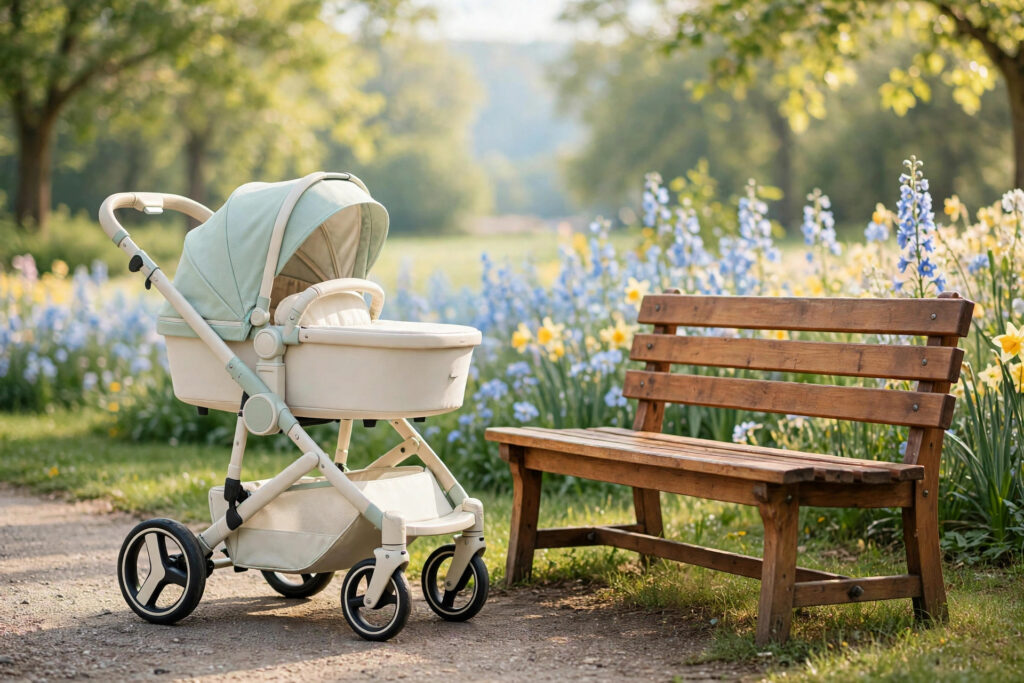
Choosing your first stroller gets much easier once you ignore the showroom and think about your actual front door. The stroller that matters isn’t the one with the longest feature list — it’s the one that fits your hallway, lifts into your car without a wrestling match, folds with a baby in your other arm, and rolls over your real sidewalks. Start with weight, folded size, and the fold itself. Everything else is a bonus.
Here’s the thing nobody tells first-time parents: you’ll fold and lift this thing thousands of times. A feature you’ll use twice a year can’t make up for a fold that fights you twice a day. So this guide works backwards from daily life. We’ll walk through how to judge a stroller in a store in about ten minutes, which specs actually mean something, and which ones are mostly there to fill a product page.
First, measure three things at home
Before you look at a single stroller, grab a tape measure. Seriously — this five-minute job saves more returns than any review ever will.
- Your doorway and hallway. Measure the narrowest door the stroller must pass through, in centimetres. Compare it with the stroller’s width, not its “compact” marketing label.
- Your car boot. Measure the floor, then picture the stroller folded alongside a grocery run. If you don’t drive, measure the corner where it’ll live at home.
- Your lift, stairs, or bus. Count the steps between your front door and the street. Every step is an argument for lighter weight.
Write the numbers in your phone. You’ll thank yourself in the store, where everything looks smaller than it is.
The specs that actually matter
Weight you can lift tired
Strollers range from feather-light travel models to full-size systems that feel like furniture, and there’s no “right” weight — there’s only the weight you can lift at 11 p.m. with a sleeping baby and a bag of groceries. In the store, pick the stroller up and carry it ten steps. Not lift it once. Carry it. If your arm is complaining, believe it.
As a rough guide used by many parenting retailers, models under about 7 kg suit frequent lifting and travel, mid-weight models around 8–11 kg balance features and portability, and heavier systems earn their weight only if they mostly roll from a garage or ground-floor hallway.
The fold, tested properly
Fold it. Unfold it. Do it three times.
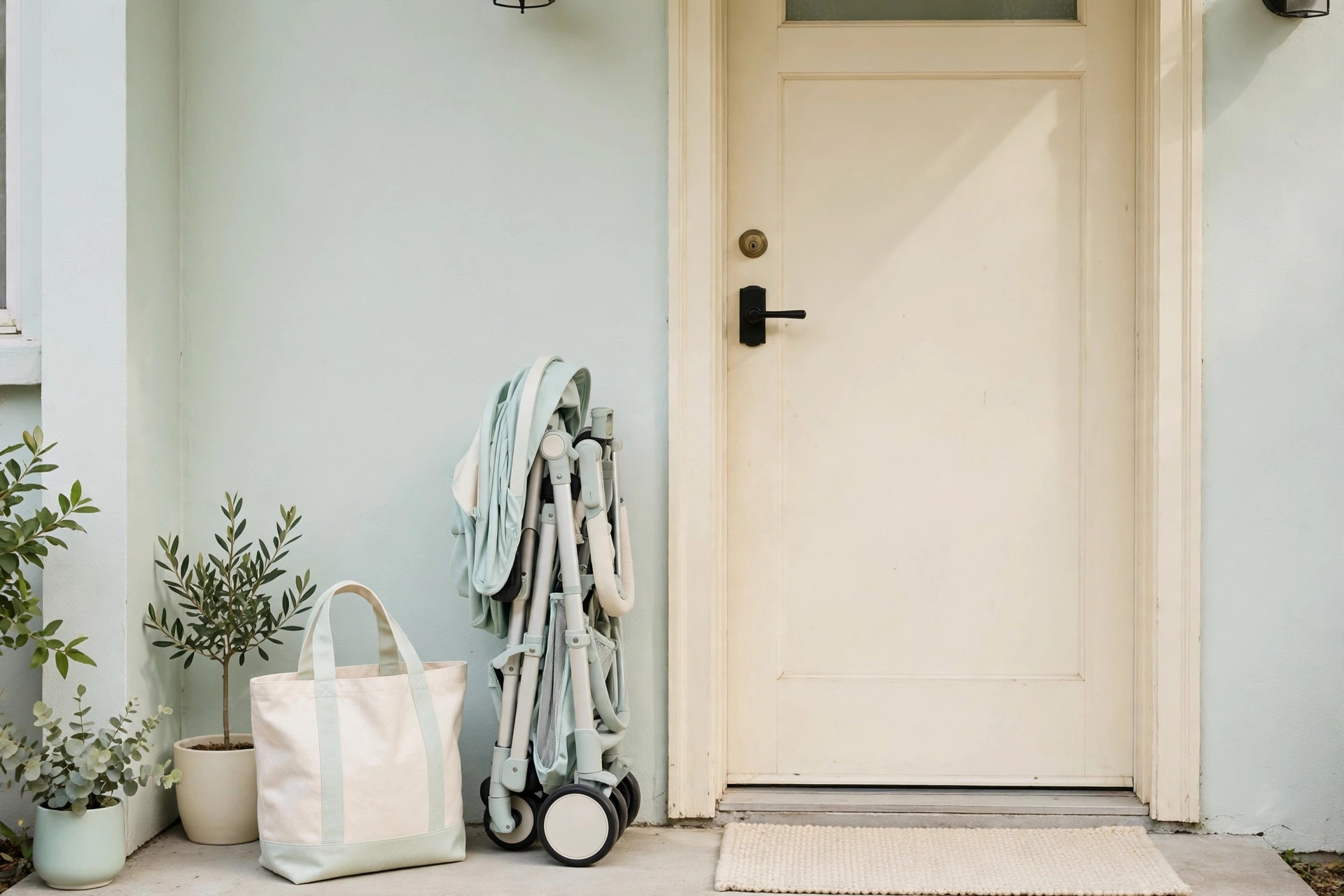
You’re checking three things: can you do it one-handed, does it stand on its own when folded, and does anything pinch, stick, or need a specific order of operations you’ll forget under pressure? A self-standing fold sounds minor until you’re holding a baby in a café doorway with nowhere clean to lean the stroller. Then it’s everything.
Wheels and suspension for your streets
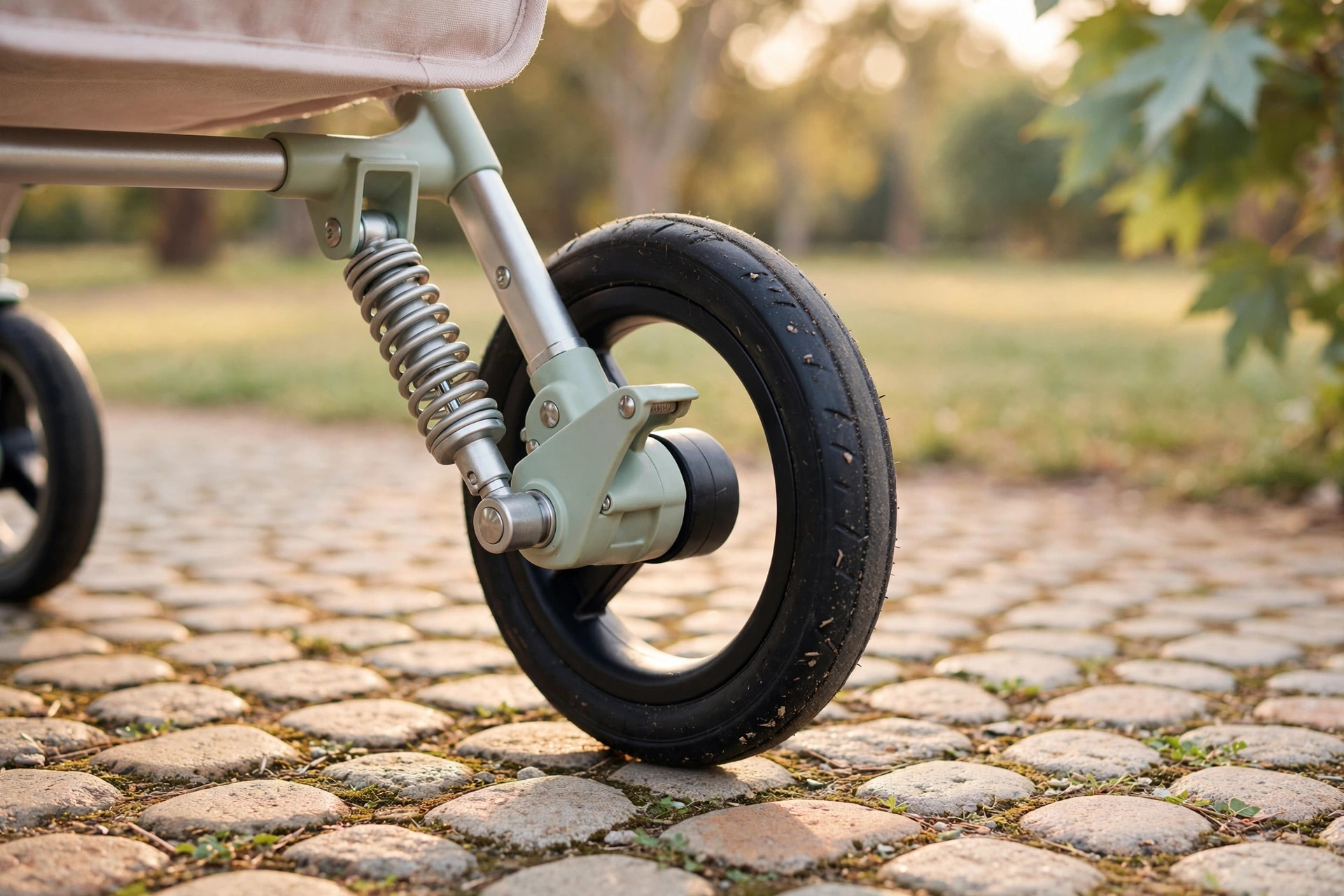
Small hard wheels are fine on smooth mall floors and miserable on cracked pavement. Bigger wheels and real suspension earn their keep if your daily routes include cobblestones, gravel paths, grass, or broken curbs. Push the stroller off the display carpet and onto the store’s hard floor, then over the threshold strip by the door if staff allow it. Listen for rattles. Feel the wobble. Your wrists will feel whatever you ignore now, every single day.
What to check for your baby, at each stage
Newborns need to lie flat, or ride in a car seat or carrycot attachment, because their necks can’t support a seated position yet — guidance from safe-sleep organisations such as The Lullaby Trust advises that young babies shouldn’t spend long periods in a semi-reclined seat, and that journeys for the youngest babies should be kept short. So for the first months, check that the seat reclines fully flat, or that a carrycot or car-seat adapter is available and affordable for the model you like.
From around six months, most babies sit up and want a view. Now the details change: a harness that adjusts without a fight, a seat that sits upright enough for snacks and people-watching, and a canopy that actually shades their face at midday angles, not just at noon in a catalogue photo.
And check the weight and height limits honestly. A stroller your tall toddler outgrows at eighteen months costs more per month than a pricier one that lasts three years.
The features worth paying for (and the ones that aren’t)
Worth it, for most families: a large storage basket you can reach when the seat is reclined, a one-hand recline you can work while your baby sleeps, washable seat fabric, and a rain cover included rather than sold separately. Brakes you can set with one foot, in sandals, matter more than cup holders. Test them in the shoes you actually wear.
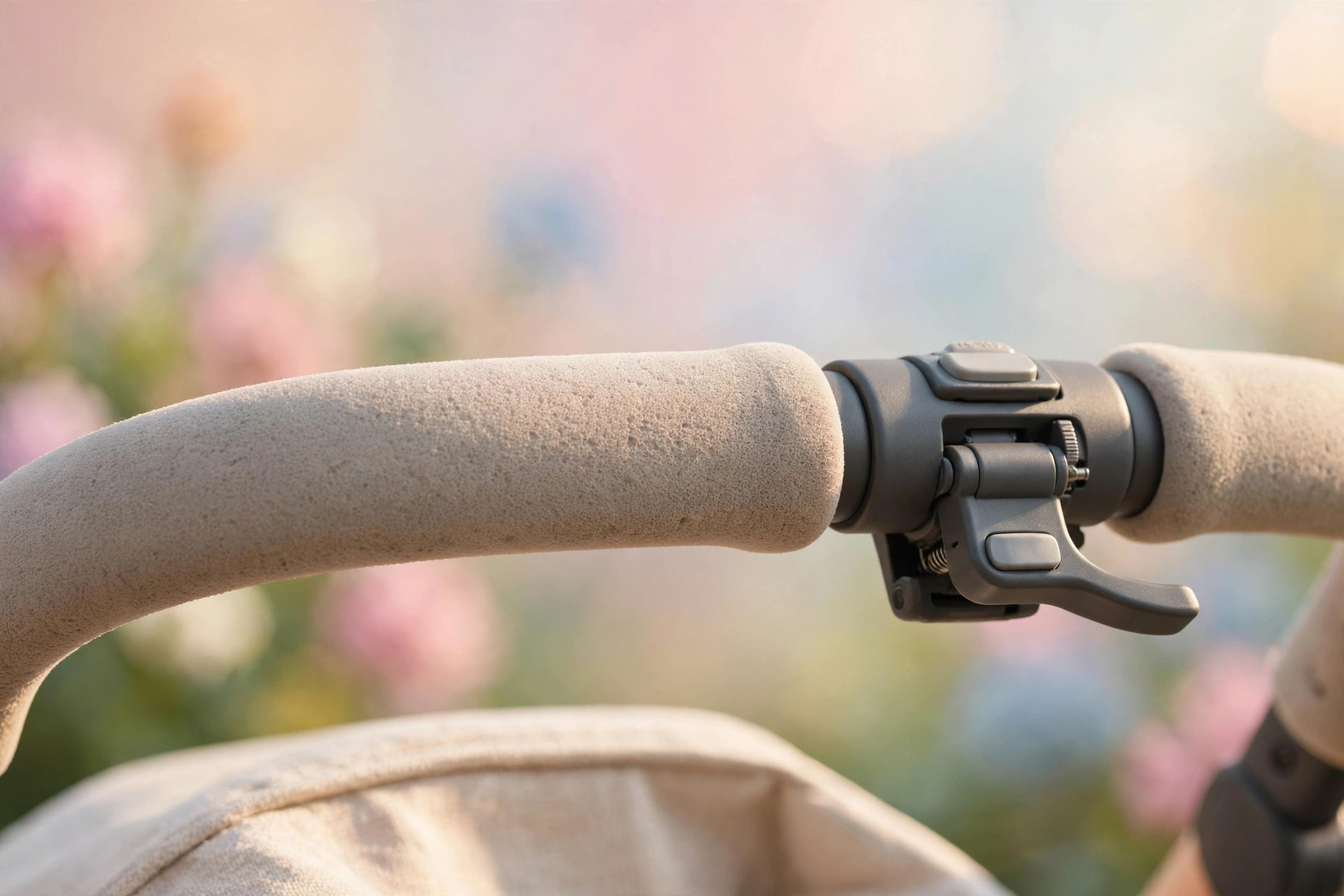
Usually not worth it: oversized accessory bundles, leather-look handle wraps you’ll be scared to get sticky, and elaborate colour-matching systems. Fancy parent organisers and snack trays can be added later for less, once you know what you’re missing. Most parents discover they’re missing exactly two things — a hook for a shopping bag and somewhere for their own water bottle.
A ten-minute in-store checklist
- Fold and unfold it three times, once with one hand.
- Carry it ten steps. Note the weight honestly.
- Push it one-handed in a tight circle — that’s café reality.
- Set and release the brake with one foot.
- Recline the seat fully, then sit it back up.
- Check the basket with the seat reclined. Put your own bag in it.
- Compare its width and folded size against the measurements in your phone.
- Ask what’s included, what the warranty covers, and whether spare wheels and fabrics can be ordered.
If a stroller passes all eight and still makes you smile a little, that’s your stroller. Don’t keep shopping for a perfect one. There isn’t a perfect one — there’s the one that fits your doors, your arms, and your streets, and then mostly disappears into your day. That’s exactly what good baby gear is supposed to do.
Frequently asked questions
When should I buy my first stroller?
Most families buy during the second or third trimester, once they’ve measured their doorway, car, and storage space. Buying after those measurements — and after deciding whether you need a flat recline, carrycot, or car-seat adapters for the newborn months — prevents the most common returns.
Do I need a travel system, or a single stroller?
A travel system suits you if you’ll move a sleeping baby between car and stroller often in the first months. If you mostly walk from home, a single stroller with a fully flat recline or a carrycot is usually simpler, lighter, and cheaper over its life.
How long will one stroller last?
Check the manufacturer’s stated weight and height limits rather than the age on the box. Many full-size models carry a child to about 22 kg, which covers most children to around four years, while light travel models often top out sooner. Your child’s height usually ends a stroller’s life before weight does.
Is a heavier stroller always sturdier?
No. Weight often reflects frame size and bundled features, not build quality. Judge sturdiness by pushing, folding, and carrying the stroller yourself: look for smooth joints, minimal wobble, and brakes and harnesses that work cleanly every time.
What safety points should I check before buying?
Look for a five-point harness, a brake that locks both rear wheels, and a recognised safety standard mark for your country, such as EN 1888 in Europe or ASTM F833 in the United States. Register the product after purchase so the manufacturer can reach you if there’s ever a recall.