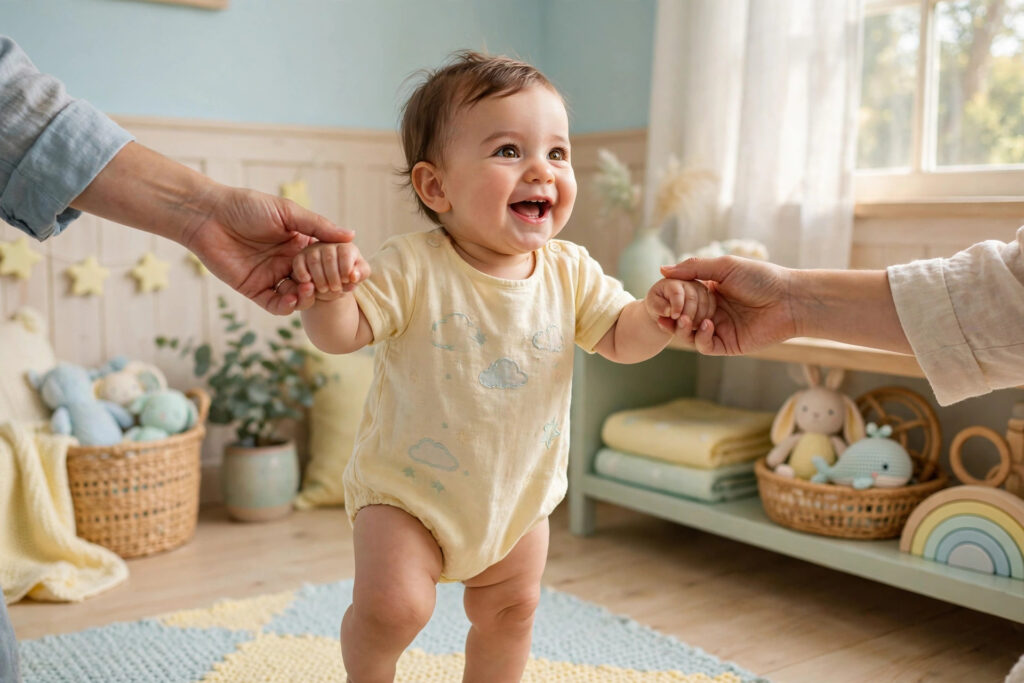
The short answer: most babies take their first steps between 9 and 12 months and walk well on their own by 15 months, according to the CDC’s developmental milestone checklists. Some start as early as 8 months. Others wait until 16 or 17 months. All of that can be perfectly normal.
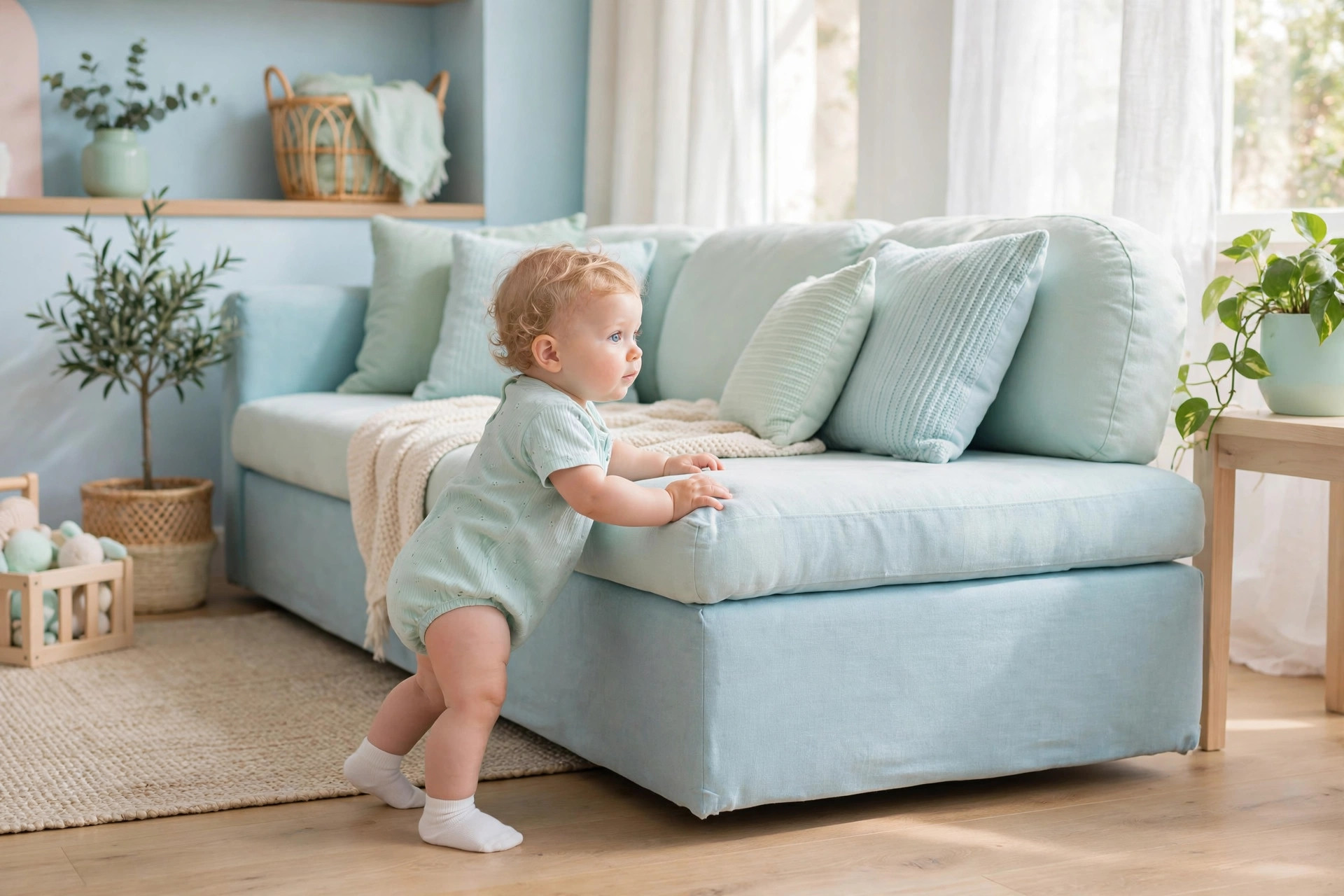
So — when do babies start walking? If you’re asking, your little one is probably pulling up on the coffee table and cruising the sofa like it’s a highway. That’s the fun part. The wobbly, arms-in-the-air, face-plant-into-the-rug part is coming.
Here’s what the timeline usually looks like, the signs that first steps are near, and the one popular product pediatricians wish would disappear.
One request before we start: if you’re comparing notes with other parents — stop. Seriously. The range of normal is so wide that stacking a 10-month walker against a 15-month cruiser tells you nothing. Watch your baby, not the group chat.
The First-Steps Timeline
Every baby writes their own schedule, but the broad pattern is remarkably consistent. Here’s how it tends to unfold:
- Around 9 months: pulling up to stand on furniture, crib rails, and your legs.
- 9 to 11 months: cruising — sidestepping along the sofa while holding on.
- 10 to 12 months: standing alone for a few seconds, then plopping down.
- 9 to 12 months: those famous first independent steps — often just two or three before a tumble.
- By 15 months: walking well on their own, per the CDC’s milestone checklists.
Notice the overlap. A baby who cruises at 9 months might not let go until 13 months. Another might skip the long cruising phase and go from standing to stepping in a week. Both are fine.
What if your baby seems early? Some pull up at 7 months and step at 9. That’s fine too — early walking isn’t a sign of advanced development, just a different timetable. And a baby who shows zero interest until 14 months isn’t “behind.” They’re usually just busy with other things, like perfecting the art of emptying every drawer in the house.
5 Signs Your Baby Is Getting Close
You don’t need a chart to see it coming. The clues are all over your living room:
- Pulling up on everything. The sofa, the dishwasher, your shins. If it doesn’t move, they’ll climb it.
- Cruising the furniture. Sideways shuffling along the couch is walking practice in disguise.
- Standing solo — briefly. Three seconds of unaided standing, then down they go. Those seconds get longer fast.
- Stoop and recover. Bending to grab a toy and standing back up without holding on. That’s serious leg strength.
- “Walking” with your hands. They grip your fingers and march forward like they own the place. The balance is almost there.
How to Help (Without Rushing It)
Here’s the good news: you don’t need gadgets or programs. The best walking coach is a safe room and time on the floor.
It all starts earlier than you’d think. Tummy time in the first months builds the neck, shoulder, and core strength that later becomes pulling up and cruising. If your baby hated tummy time (many do), don’t worry — plenty of floor play on their back and sides works too. The point is movement, not a specific exercise.
- Clear a runway. Push the coffee table back, pad sharp corners, and give them a straight stretch of floor to cruise.
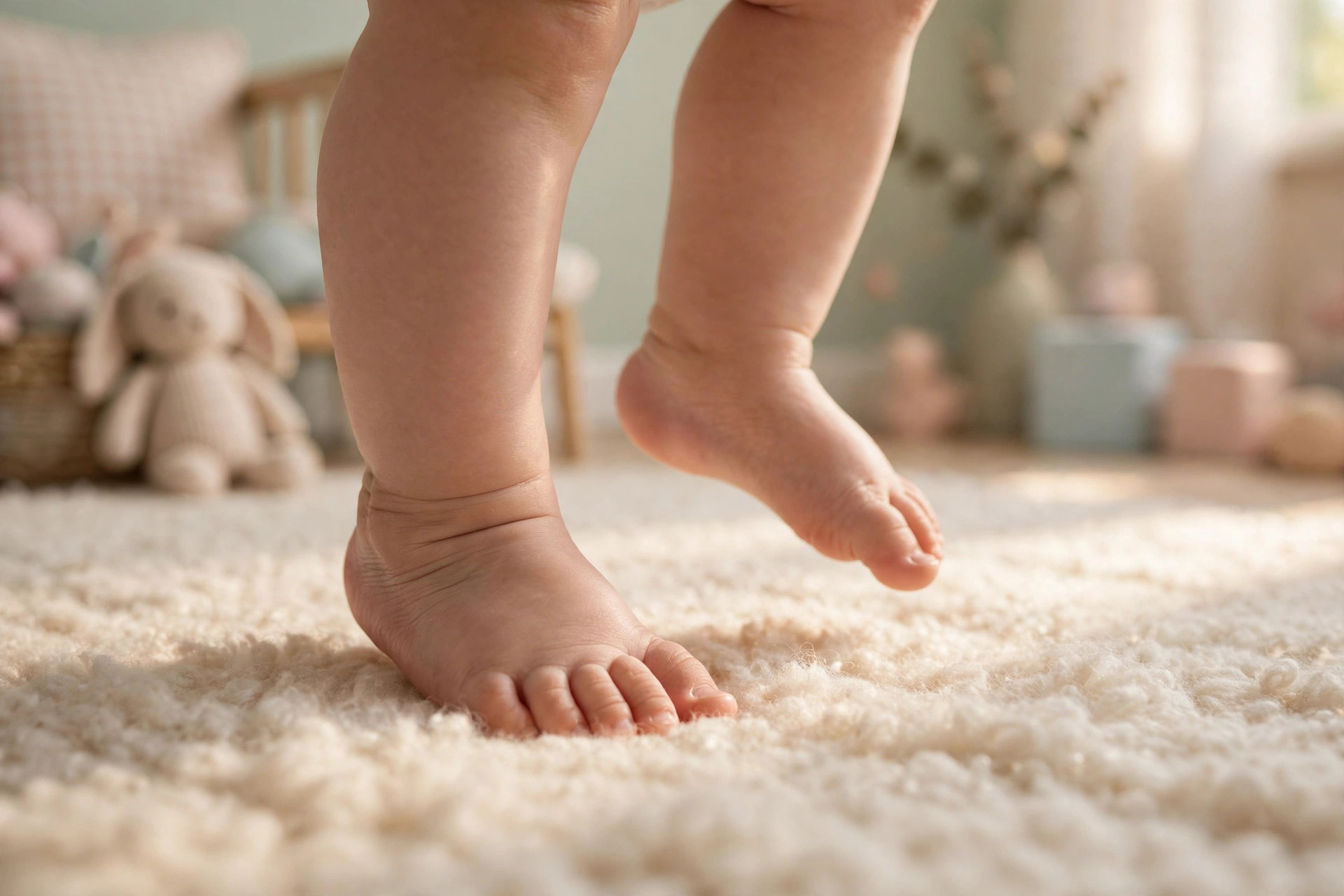
- Go barefoot indoors. Bare feet grip better and let babies feel the floor, which helps balance. Save the shoes for outside.
- Offer a sturdy push toy. A solid push cart (weighted so it can’t tip or roll away) gives them something to lean on. Skip anything flimsy.
- Get down on their level. Sit a few feet away with open arms. Most babies will try harder for a smiling face than for any toy.
- Let them fall. Hard to watch, but small tumbles on a rug teach balance faster than being caught every time. Stay close, stay calm.
And the shoes question? For outdoor walks, pick something lightweight with a flexible sole — you should be able to bend it in your hand. Stiff, supportive “first walker” shoes aren’t necessary; feet do the work best when they can move.
The One Thing to Skip: Baby Walkers
You know the ones — babies sitting in a fabric seat, scooting around on wheels. They look fun. Pediatricians strongly disagree.
According to the American Academy of Pediatrics, traditional sit-in baby walkers should be avoided. A 2018 study published in Pediatrics found that more than 230,000 children under 15 months were treated in U.S. emergency departments for baby-walker-related injuries between 1990 and 2014 — many from falls down stairs, which walkers make faster and more dangerous.
They don’t teach walking sooner, either. Walkers let babies move before their muscles and balance are ready, which can actually slow down the real thing. A stationary activity center (no wheels) is the safer swap if you want a contained play spot.
Already have a walker in the garage from an older sibling? You’re not a bad parent — they were marketed as developmental tools for years. Just retire it. Your baby will get there on their own two feet. Literally.
When to Mention It to Your Pediatrician
Most late walkers are just late walkers. Still, it never hurts to ask at a checkup — that’s what pediatricians are for.
The CDC lists not walking by 18 months as a sign to act early and talk to your child’s doctor. Also worth mentioning: if your baby consistently drags one side of the body, seems unusually stiff or floppy, or was pulling up and cruising but then lost those skills. Losing a skill they had is always worth a call.
Between 15 and 18 months and not quite there yet? Mention it at the next visit. No panic needed, just a conversation.
One more thing: bring specifics about what your baby can do — pulls up, cruises, stands briefly. Pediatricians love details. “Not walking yet” is vague; “cruises everywhere but won’t let go” tells them exactly where things stand.

First Steps FAQ
My 14-month-old isn’t walking yet. Is that normal?
Very likely, yes. The typical range stretches to 16 or 17 months for some babies. If they’re pulling up, cruising, and otherwise active, they’re probably just taking their time. The CDC flags not walking by 18 months as the point to talk to your pediatrician.
Do baby shoes help them walk sooner?
No — and stiff shoes can actually get in the way. Barefoot is best indoors while they’re learning. For outside, choose lightweight shoes with soft, flexible soles that bend easily in your hand.
Should I hold my baby’s hands and “walk” them around the room?
A little is fine and fun, but don’t overdo it. Dangling from your hands teaches them to lean forward and rely on you for balance. Cruising furniture and pushing a sturdy cart build steadier skills.
My baby skipped crawling. Will that delay walking?
Not necessarily. Some babies go straight from sitting to pulling up to walking, and that’s a normal variation. Crawling is great exercise, but skipping it isn’t a problem on its own.
Are sit-in baby walkers really that bad?
Pediatricians say yes. Beyond the injury numbers — more than 230,000 ER visits for under-15-month-olds over a 24-year period, according to a 2018 Pediatrics study — walkers don’t speed up walking and can delay it. Choose a stationary activity center instead.
Not sure of your baby’s exact age in months and weeks? An age calculator gives you the precise number, which makes milestone ranges like the ones above much easier to read.